 View EU Site


Tips to extend the battery life of your two-way radio
 6th Dec 2022
What affects your two-way radio’s battery life, how long should the battery last, and how can you extend it for maximum performance long-term?
Released On 29th Jul 2015
UPDATED 07/04/2026
Our guide to NiMH, Lithium-ion and NiCad batteries answers your questions about longevity, power, battery charging cycles, self-discharge, memory effect and much more.
Choosing the right two-way radio battery is no longer just a question of NiMH vs Li-Ion. While those are still the two battery types most buyers compare, some radio fleets continue to use NiCad batteries, particularly where older equipment is in use, or specialist operational requirements are involved.
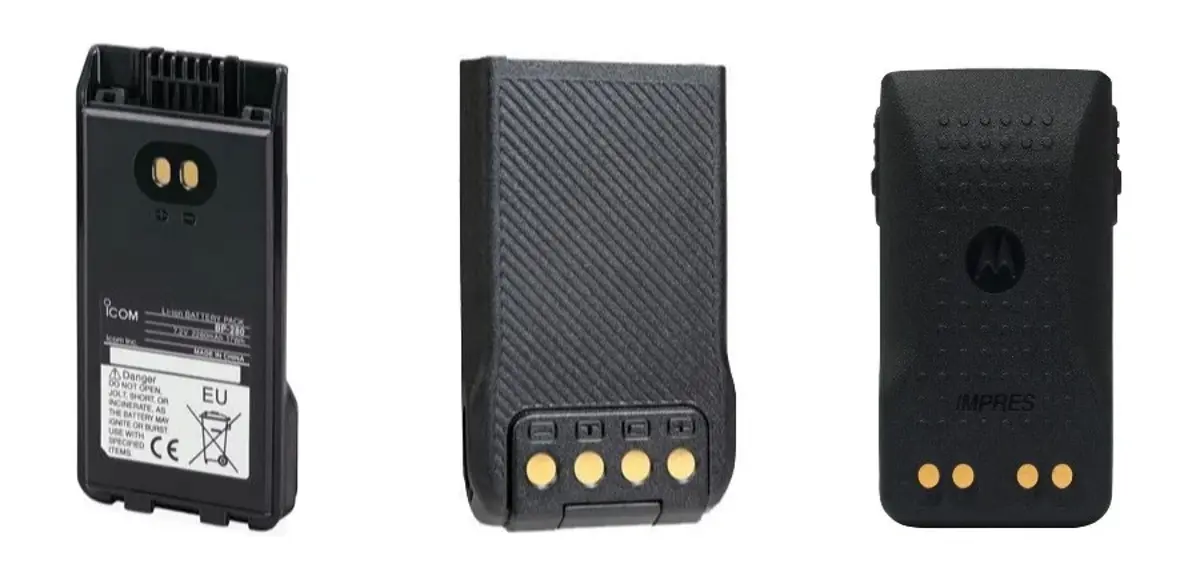
This guide explains the main types of two-way radio battery, the practical differences between NiCad, NiMH and Li-Ion, and how to choose the right option for your radios. It also includes a brief overview of Motorola IMPRES, which is a battery management and charging system rather than a separate battery chemistry.
For most modern handheld radios, Li-Ion is usually the best all-round choice. It’s lighter, more compact and generally better suited to long working shifts.
That said, NiMH can still be a sensible option where compatibility and upfront cost matter, while NiCad remains relevant in some legacy and specialist environments.
If you use compatible Motorola equipment, you may also come across IMPRES. This isn't a separate battery type. It's Motorola technology designed to improve battery charging and battery management.
The three main battery chemistries you are most likely to come across are Nickel Cadmium (NiCad), Nickel Metal Hydride (NiMH) and Lithium-Ion (Li-Ion).
Although this guide looks at the wider battery picture, the most common comparison for modern buyers is still NiMH vs Li-Ion. If you are choosing a battery for a current handheld radio, these are usually the two options most likely to come up.
One of the main advantages of Li-Ion batteries is that they are typically lighter and more compact than NiMH alternatives. That matters when radios are clipped to a belt, worn on a vest or carried throughout a long shift.
NiMH batteries are often bulkier for a similar level of performance. That does not make them unsuitable, but it can make them less convenient where users want the lightest possible setup.
Li-Ion batteries are often preferred because they can deliver strong runtime without adding as much size or weight.
In practical terms, that makes them attractive to users who want dependable performance from a compact radio battery.
NiMH batteries can still provide reliable service, but they are generally less efficient in terms of size-to-power ratio. In many like-for-like comparisons, that means more bulk for a similar result.
Charging behaviour is another important difference. NiMH batteries can be more sensitive to charging habits than Li-Ion batteries, and nickel-based batteries are more often associated with memory effect (where a battery's capacity for holding a full charge diminishes over time).
In practice, that means users should follow the correct charging routine for the battery and charger they are using, rather than assuming every rechargeable battery behaves in the same way.
If a battery is likely to sit unused for periods of time, self-discharge becomes more important.
For most modern users, Li-Ion is the stronger all-round choice. It combines lighter weight, practical runtime and straightforward day-to-day charging.
NiMH still has a place, especially where compatibility, budget or existing fleet set-up make it the more sensible option.
| Battery type | Main strength | Main drawback | Best suited to |
|---|---|---|---|
| Li-Ion | Lightweight, modern and efficient | Usually higher upfront cost | Most modern handheld radio users |
| NiMH | Familiar rechargeable option | Higher self-discharge and more bulk | Compatible setups where cost matters |
| NiCad | Legacy compatibility and durability | Older, heavier, more niche | Existing fleets and specialist use |
Nickel Cadmium is an older, rechargeable battery chemistry that was once widely used in radio communication and other professional equipment.
For two-way radio users, NiCad batteries built a reputation for robustness and familiarity. Many fleets shaped their battery replacement routines, charging infrastructure and spare stock around NiCad, which is one reason it remained a long-standing choice in professional communications.
Legacy radio fleets - Today, NiCad is far less common than NiMH and Li-Ion. Even so, it still has a place in parts of the market where organisations have older radio fleets still in service, or where specialist requirements make compatibility more important than switching to a newer chemistry.
Specialist operational use cases - Some professional users still encounter NiCad batteries in specialist or rugged radio setups, particularly where compatible intrinsically safe options are required. In these situations, continuity, certification and equipment compatibility may matter more than adopting the newest chemistry.
Pros: Li-Ion batteries are widely favoured because they are lighter, more compact and well suited to modern full-shift radio use. For many organisations, they offer the best blend of convenience, runtime and day-to-day practicality.
Cons: Li-Ion batteries can cost more than some alternatives, and buyers still need to make sure they are choosing the correct compatible battery and charger for their specific radio model.
Pros: NiMH remains a practical, rechargeable option for many compatible radios. It can make sense where users want a familiar battery type, need a suitable replacement for an existing setup or are balancing performance against upfront cost.
Cons: Compared with Li-Ion, NiMH batteries are often bulkier and can lose charge more quickly when left unused. That can make them less convenient for users who want the lightest possible setup or need radios ready at short notice.
Pros: NiCad can still make sense where legacy compatibility matters. It has a long history in radio communication and can remain useful in fleets built around older radios, chargers and maintenance routines.
Cons: For most new buyers, NiCad is an older and more limited option. It is generally less attractive than Li-Ion for modern handheld use and is now much more niche than it was.
Motorola IMPRES isn't a separate type of battery chemistry, unlike the others mentioned in this guide. But it's worth mentioning because of its impact on modern battery technology. IMPRES is an intelligent battery and charger system designed to improve battery management for compatible Motorola radio fleets.
In practical terms, IMPRES is designed to make battery charging and battery care more straightforward, especially in larger fleets where radios are used heavily and battery condition matters day to day.
We will cover Motorola IMPRES technology in more detail in a separate guide.
There is no single answer for every radio or user. Battery life depends on the radio model, battery quality, usage patterns and charging routine. For many modern handheld radios, Li-Ion is often chosen because it offers strong all-round performance.
We've written in more detail about tips to extend your two-way radio's battery life.
The right battery depends on your radios, your charging set-up and how the equipment is used day to day.
If you already use compatible Motorola equipment, it may also be worth considering IMPRES-compatible batteries and chargers as part of a wider battery management strategy.
If you are unsure which battery type suits your radios, it is worth checking compatibility before you buy. The right choice will depend on your radio model, charger set-up and how your team uses the equipment in practice.
Browse our range of two-way radio batteries or get in touch for advice on choosing a compatible replacement.
Browse for:
6th Dec 2022
18th Nov 2015
Stay up to date with the latest from RadioTrader