 View EU Site


Licences for Two-Way Radios - Do You Need One?
 13th Nov 2023
Updated 2025 - UK guidance on Ofcom radio licences: who needs one, licence-free vs licensed radios, available licence types, costs, and PoC alternatives.
Released On 23rd Aug 2022
Understanding some of the key differences between VHF and UHF, and their optimum working conditions, will help you choose the best two-way radio for your needs.
A common pain-point for some customers when buying a radio is knowing whether to choose the VHF or UHF model. Of course, our friendly team here at RadioTrader is always ready to jump in and advise, but this simple guide will hopefully provide some useful information.
| Feature / Use Case | VHF (Very High Frequency) | UHF (Ultra High Frequency |
|---|---|---|
| Typical Uk Frequencies | 136–174 MHz business radio; 156–162 MHz marine; 118–137 MHz aviation (airband) | 403–470 MHz business radio; 446.0–446.2 MHz licence-free PMR446 (0.5 W ERP, integral antenna only) |
| Wavelength | Longer (~1.7–2.2 m) | Shorter (~0.6–0.75 m) |
| Range | Better over long, unobstructed distances; signals travel further across open countryside | Better through walls, buildings and urban obstacles; shorter overall range outdoors |
| Propagation traits | Waves bend/diffract around hills and follow terrain; less affected by foliage at moderate densities | Penetrates structures more effectively; higher frequencies attenuate more in vegetation, but cope well with indoor multipath reflections |
| Antenna size | Longer antennas (often 40–50 cm on handhelds) | Shorter antennas (10–20 cm), easier to carry/wear |
| Typical sectors / uses | Agriculture, forestry, marine, aviation, golf courses, outdoor events, countryside security patrols | Warehousing, retail, construction sites, hotels, hospitals, factories, urban events |
| Licensing (UK) | Requires an Ofcom business radio licence (Simple UK/Simple Site/Technically Assigned/Area Defined) | PMR446 is licence-exempt; higher-power UHF channels need an Ofcom business licence |
| Compatability | Works only with other VHF radios on same frequency/mode | Works only with other UHF radios on same frequency/mode; VHF & UHF radios don’t inter-talk unless via dual-band units or cross-band repeaters |
VHF stands for Very High Frequency, and UHF stands for Ultra High Frequency.
In the UK, the VHF and UHF radio frequency bands are regulated by Ofcom. In Ireland, the equivalent organisation is ComReg. Ofcom and ComReg regulate who can operate within certain frequency ranges for both VHF and UHF, and who might have priority over other operators.
People use radios or walkie-talkies in lots of different environments: indoors, outdoors or at sea, from warehouses to building sites, mountains to shopping malls, farms, mines, ships and sports stadia.
The main problem is that, for complicated reasons, VHF and UHF radios each tend to operate better in certain environments. Some of the examples above pose problems of sheer distance between users; others involve a rugged landscape or a built-up area with lots of obstacles.
The good news is, either frequency band can work just fine if you don’t have a long range to cover. Where there may be issues, there’s usually a VHF or UHF radio solution for most environmental conditions.

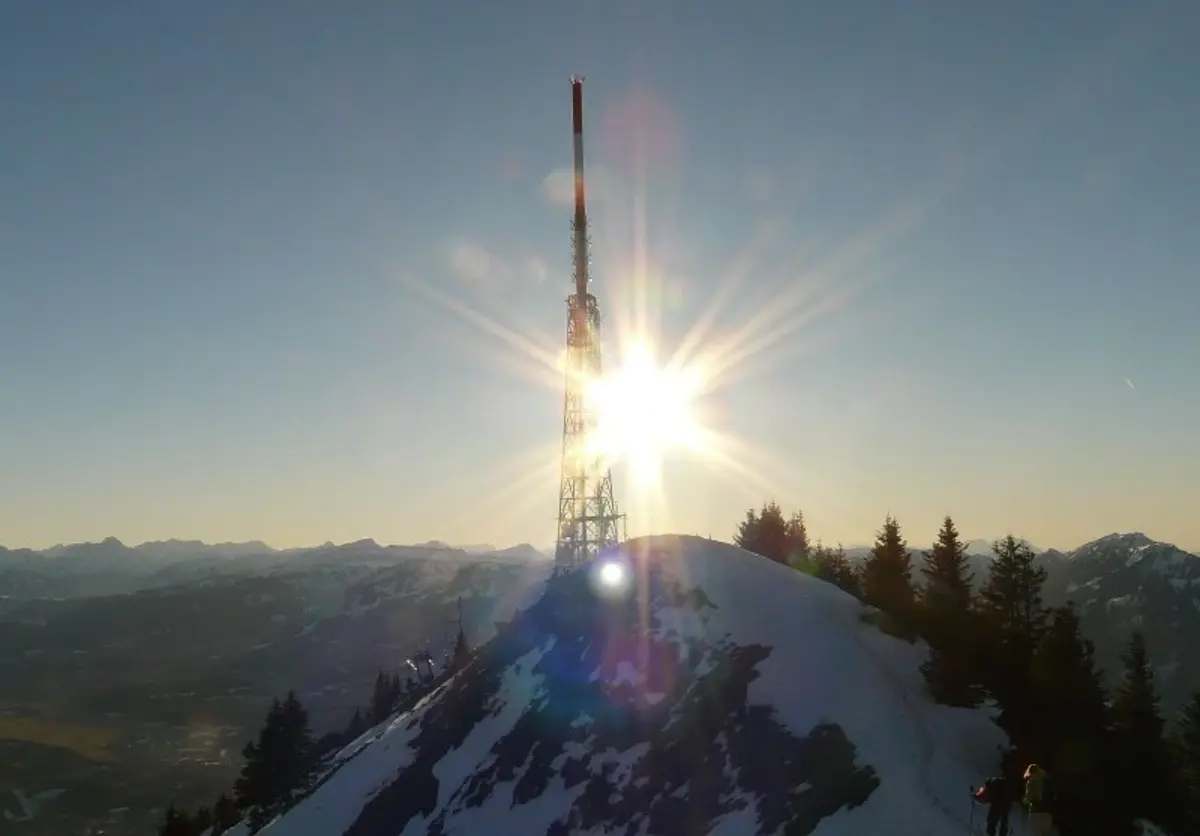
Radios operating on VHF frequencies are very popular for professional applications. VHF radio is generally a line-of-sight form of communication, working better outdoors in open terrain. In the right conditions, VHF transmissions can travel much further than UHF for a similar power output. For this reason, VHF radios are used exclusively in marine communications and civil aviation environment using the following dedicated VHF bands:
It’s also why, in open countryside, a VHF radio is the ideal choice, allowing good communication over longer distances.
Ideal uses for VHF radios
However, VHF frequencies become weaker and aren’t as effective where there are lots of dense, solid objects between users, for example inside buildings. This might not be too much of an issue where the distance between users isn’t too great, and even then, external antennas or repeaters can help to boost the signal.
.jpg)
About UHF
UHF radio frequencies have less range than VHF, but they are still very popular with users in many operating conditions, in particular indoor environments, heavily wooded or hilly landscapes, or built-up urban areas. This is because UHF wavelengths can find their way more easily around dense objects and obstacles than VHF.
There's also a wider number of frequencies available to UHF, which means there’s less chance of interference from other systems.
For users who want a radio that’s a good “all-rounder”, indoors and out, and for those looking for the best two-way radio for urban use, a UHF radio may come with some limitations, but it is generally a good choice.
Ideal uses for UHF radios
Typically, antennas on UHF radios are shorter than those on VHF radios, because they don’t need to facilitate transmission over such long distances.
Not directly - unless everyone uses the same band, mode and channel, or you deploy cross-band repeaters / gateways; some handsets are dual-band but must still share the same frequency to talk.
Technology marches on, and here at RadioTrader, it's no longer simply a question of UHF vs VHF when it comes to the right radio solution for a customer. Push-to-talk over cellular devices (PoC) don’t use radio waves at all. They operate using a broadband or 4G LTE cellular network, on devices that can look a lot like a two-way radio or a mobile phone. In fact some PoC platforms, like our own Connect Plus, can work via an app on your existing mobile device.
Unlike mobile phones, which only support one-to-one calls, PoC devices support individual or group transmissions, as you’d expect from a two-way radio. They also include many of the same advanced radio features that enable you to enhance your team's safety and productivity.
The useful advantage of PoC systems over VHF and UHF devices is that they can communicate over any distance at all, and they aren’t affected by built-up areas or obstacles.
Need more infromation? Please get in touch with us for more advice about the best two-way radio system for your business.
13th Nov 2023
2nd Jun 2023
Stay up to date with the latest from RadioTrader