 View EU Site



Push-to-Talk over Cellular (PoC) for NHS: RugGear RG360 Case Study
 Released On 16th Apr 2024
UPDATED 23/10/2025
Improving communication across NHS hospital departments

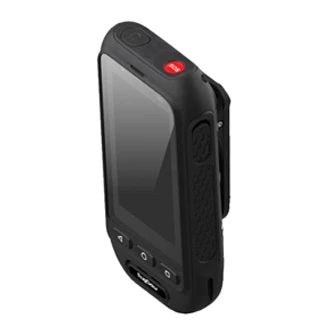
This case study outlines how an NHS hospital implemented Connect Plus, a push-to-talk over cellular (PoC) system from RadioTrader, using RugGear RG360 handhelds. The deployment spans the hospital’s security, domestic services, and emergency teams, providing a single, managed platform for day-to-day coordination and incident response.
While many hospitals rely on traditional two-way radios for the NHS, this project shows that PoC can complement or replace older systems – reducing complexity and improving communication.
Operational challenges identified
- Limited radio coverage: Conventional hospital radios were constrained by site topology and dead zones, creating gaps and delays, particularly in areas with poor reception such as basements and service corridors.
- High infrastructure overheads: Achieving site-wide coverage with traditional radio meant multiple repeaters, combiners, and distributed antennas. This added cost, engineering time, and ongoing maintenance.
- Inter-site communication: The hospital Trust wanted to enable secure, routine coordination with neighbouring hospitals in the future, without building and linking separate radio system infrastructures.

Why Connect Plus and the Ruggear RG360?
In a busy hospital environment, reliable voice, group calling, and simple user workflows matter more than features for their own sake. Patient safety and efficient operations were key priorities.
Following a short discovery and pilot, the hospital selected Connect Plus with RugGear RG360 devices to address these needs while maintaining the familiar functional design of a PTT radio.
UK-wide coverage using existing networks
 PoC leverages cellular (multi-network SIMs) and secure Wi-Fi. For this site, that meant hospital-wide coverage immediately, with the option to extend conversations across multiple hospitals on day one – useful for patient transfers, bed management, and collaboration between departments.
Lower infrastructure burden
Because Connect Plus rides on existing networks, there was no requirement to procure or maintain repeaters or RF distribution. This reduced capital expenditure and simplified estates planning.
Scalable, role-based talk groups
Connect Plus allows user additions and talk-group changes to be administered centrally and applied over-the-air in minutes. Departments can be added or reconfigured without site visits.
Implementation approach
- Planning: Requirements gathered with department leads (security, portering, domestic, emergency) to map talk groups, priority calls, and escalation paths.
- Network integration: Collaboration with hospital IT to segment PoC traffic on the secure Wi-Fi, with QoS where available. Cellular fall-back configured via multi-network SIMs.
- Device profile: RugGear RG360 devices provisioned with role-specific profiles (PTT button behaviour, emergency alert, lone-worker).
- Training and go-live: Short, task-based sessions for supervisors and end users; administrators trained on over-the-air changes and audit trails.
- Evaluation: Post-deployment review captured response times, call completion rates, and user feedback to refine talk-group structure.
Results observed
- More consistent coverage: Staff reported fewer missed or failed calls in previously poor-signal areas, aided by Wi-Fi indoors and cellular outdoors.
- Simplified operations: This unified communication platform reduced reliance on third-party engineering visits for everyday changes. Operational efficiency and emergency response capabilities were significantly enhanced.
- Inter-hospital talk groups: The Trust enabled controlled, auditable communication with partner sites without new RF builds.
- Cost profile: Removal of repeater and antenna maintenance shifted expenditure from capital to predictable operational costs.
(Note: Outcomes reflect this hospital’s environment; coverage and performance depend on local Wi-Fi and cellular conditions.)
Where PoC fits alongside traditional hospital radios
PoC is not a universal replacement. Many NHS hospitals run a mixed fleet:
- Use PoC when: you need fast inter-site communications, broad geographic coverage, over-the-air administration, or integration with smartphones and dispatch consoles.
- Keep/augment DMR when: you require full autonomy from public networks, deterministic coverage in RF-engineered spaces, or operation during extended WAN outages.
A pragmatic roadmap can combine both: retain critical DMR channels for business-continuity, while using PoC to extend coverage and simplify everyday coordination.
FAQs for NHS IT managers
Q. Is PoC compliant with NHS security requirements?
A. To be considered compliant with NHS security requirements, a PoC solution must be assessed against several key standards, particularly the Data Security and Protection Toolkit (DSPT). While PoC technology itself offers security features like encryption, compliance is not automatic - it depends on the system and the security controls put in place by the NHS organisation using it. RadioTrader can support technical due diligence alongside your IG team.
Q. Will PoC work in areas with poor cellular signal?
A. PoC relies on IP connectivity. In areas with weak cellular, performance can be maintained via secure Wi-Fi. Resilience measures include multi-network SIMs, automatic network switching, and offline/emergency behaviours configured per role. A site survey can validate Wi-Fi/cellular coverage in theatres, plant rooms, and basements.
Q. How does PoC compare to DMR for multi-site hospitals?
A. For multi-site hospitals, PoC offers superior scalability and broad coverage, while Digital Mobile Radio (DMR) provides greater independence and reliability through a private network.
Many Trusts adopt a hybrid approach to balance resilience and flexibility.
Key takeaways for two-way radios in NHS settings
- PoC using Connect Plus and RugGear RG360 provided this hospital with consistent site coverage, simpler administration, and controlled inter-site communication.
- Traditional hospital radios (DMR) remain valuable where absolute network independence is required.
- A measured, requirements-led trial will determine the right blend for your estate.
Considering PoC for your site?
If you’re evaluating two-way radios for the NHS, whether that’s a PoC, DMR, or a hybrid solution, RadioTrader can help with a structured pilot, coverage assessment, and integration plan tailored to your network and clinical workflows.
Get in touch to find out how we can help.